The Federal Republic of Olodos
Nigeria broke the contract of education, then began insulting the people who stopped believing in it.

Olodo is the boy who came 14th in a class of 35. With him, everyone after his rank would be subjected to a small public humiliation. The word presumed that school was the road to success, and that being slow on it was a disaster. The future belonged to those who sat in the front of the class, raised their hands during question time, and got higher marks in homework.
But that world has come apart. The students once tortured with that label are taking a different road.
YCee recently appeared on the Afropolitan Podcast and gave the moment a name. He called it the Olodo Uprising, a brilliant coinage that describes a revolution that rewards shallow behaviour above intelligence. He said it has replaced yahoo-yahoo culture. He named the streamer Peller as an embodiment of the uprising. Within a week, the phrase became more popular than it had ever been.
The most cutting response to YCee was from Jarvis, Peller's partner. She said she was a graduate, but with jobs being scarce, she had turned to content creation. She asked her detractors what they expected her to do. Clean toilets?
It is one of the strongest arguments in the viral debate. If a system promised that education would lead to livelihood and failed to fulfil that promise, people will reconsider the value of education. They are being economically literate about a contract the state broke. Calling them olodos provides moral satisfaction but reveals a lack of analytical depth, which is itself a sophisticated olodo thinking.
The contract asked people to study, get qualifications, find work, build a life and pay taxes. But the state abandoned its side of the contract through a series of failures that devalued certificates. The economy relies on extracting wealth from oil more than on broad productivity. A young person who sees all of this and chooses to record herself eating amala for two million viewers is making a rational decision within an irrational economy.
Educated people have noticed that their prestige has collapsed, so they have given the collapse the dignified name of national decline.
Peller earns more money than most first-class graduates, and to complain about this is partly reasonable. Nowhere in the world does a first-class degree automatically guarantee a high income. But aspiring to academic excellence should be encouraged in a society that generally values and rewards excellence and competence.
The complaint, really, is also the complaint of a class that is reacting to a loss of social standing. Their complaint contains a real concern, which Jarvis only partly answered. Every country produces its share of the unserious and the trivial. Where America churns out Nobel laureates, it has its share of junk TV. A reasonable country refuses to let one side become its most prominent national definition.
Nigeria has not negotiated that contract yet. Other nations have made versions of it. They agreed to fund education, reward disciplined careers, and build institutions to keep the agreement. South Korea used it to focus on engineering and steel. India, perhaps the closest to Nigeria in economic and social contradictions, built lasting expertise in software and medicine.
For us, we celebrate education in speeches while underfunding schools. Teachers are overworked and underpaid, and exams are mostly designed to reward cramming over critical thinking.
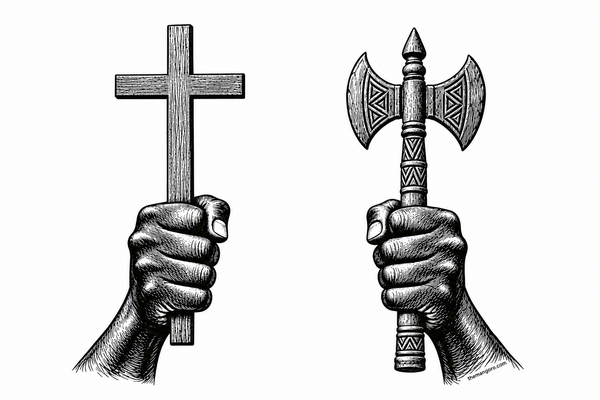
And this is where I should be careful. But let's face it. Religion also sits inside the problem. It consoles, disciplines, moralises and deepens. But when it devotes more than reasonable attention to giving and managing hopes, it takes parts of people's attention from the business of nation-building. That's not a mere hypothesis. An observer familiar with Nigeria's brand of religiosity might wonder how a brain conditioned to interpret structural failure as a spiritual attack can build the mental capacity for, say, engineering. A student who forfeited a potential career in physics for deliverance ministry because of claims about ancestral enemies has been robbed in a way the church will not acknowledge. Where do we even start to reverse that?
When a country's clergy class is more famous than its surgeons and engineers, it reveals everything about its priorities.
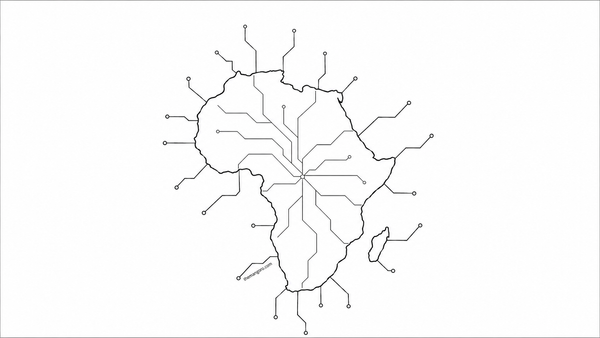
We know colonialism bears undeniable blame for fracturing institutions, borders, languages, and imagination. It left unhealed wounds. But at some point, a country has to look at what it has done since the colonial masters left.
The complication with our beloved country is quite fascinating. It is globally recognised for its literary, cultural and entrepreneurial achievements, which suggests a progressive and innovative national character. And somehow it continues to elect the same political class across generations and pretends to be surprised.
Still about the educated class.
The discomfort around the Olodo Uprising debate is that the class talking about it has also helped to build it. They staffed the universities and served on boards that favoured hiring candidates through personal connections over merit. And then they wonder why the country sounds different from them.
There is a brilliant line in 2Face's song, "Higher (Spiritual Healing)," that should become part of folk wisdom. "To be civilised, you don't have to be educated." It suggests that seeing the light does not require formal schooling. It dismisses the kind of education that does not produce wisdom or cultivate the mind, as they are fundamental to everything else. A country without them can buy technology, announce reforms, invent Afrobeats, organise the loudest Detty December, sometimes win at football. It will still wobble when character is required.
Let us go home. The country needs more than programmes or policies. A culture is repaired in what parents praise and condemn. When the home yields to the dynamics of bad government, children are likely to be trained for survival without character. Smartness replaces truth, credentials lose value because they cannot quickly become money. It becomes commonplace not to question the source of sudden wealth.
Back to churches and mosques, which have a difficult choice to make. Faith that reduces fear is one thing. Faith that monetises fear is another. The pastor or imam who chooses to reduce fear will lose some of his audience to the one who monetises it. The marketing competition among Nigerian Pentecostal churches, for instance, would embarrass many corporate brands. Almost no Nigerian religious institution would be willing to lose members in the interest of national reckoning.
Media enjoys the same incentive. Sensational headlines generate more click rates than carefully crafted headlines. These forces shaped the influencer and attention economy that both YCee and Peller now inhabit. Their aesthetics differ, but the underlying logic is similar.
All of this presupposes trust, which is in ridiculously short supply in Nigeria. A society whose people no longer trust teachers, the economy, government, media, or the law will not always turn to those institutions when it needs them. It will turn to whatever offers quick and visible proof. Attention. Fame. The Olodo Uprising is, in some way, a market correction by people who lost faith in the longer auctions.
The small population of the cultivated class has work to do. There is a habit inside Nigerian intellectual life of preferring the country as material rather than as a living nation. The diasporic essay about the country. Another podcast about the country. Etc. The actual work of building institutions is less rewarding and is undertaken by fewer of the kind of people who should be doing it. Jarvis may have read the contract correctly or incorrectly, depending on who is judging, but many of the people who could read it have read have chosen to dismiss it.
When school disappointed him, a schoolboy in Yaba decided to film himself for two million viewers. He is now rich and spends more time filming in a room running on a generator. This boy does not see himself as a symbol of national decline.
A professor is preparing a paper for a conference she is unlikely to attend because her salary has not been paid for 3 months. She does not consider her case a sign of national decline either. She is busy trying to survive and has no time for the metaphor.
The Olodo Uprising did not come from nowhere. Na we make am.
Renewal will begin with a small and dedicated group of people. Teachers who genuinely enjoy their work, civil servants who refuse bribes, parents who read after dinner, etc. The country we need will be built by them when these small acts add up and scale nationally.
Some of them have already started. Do not call them olodo!