Ten Radical AI Ideas Africa Needs Now
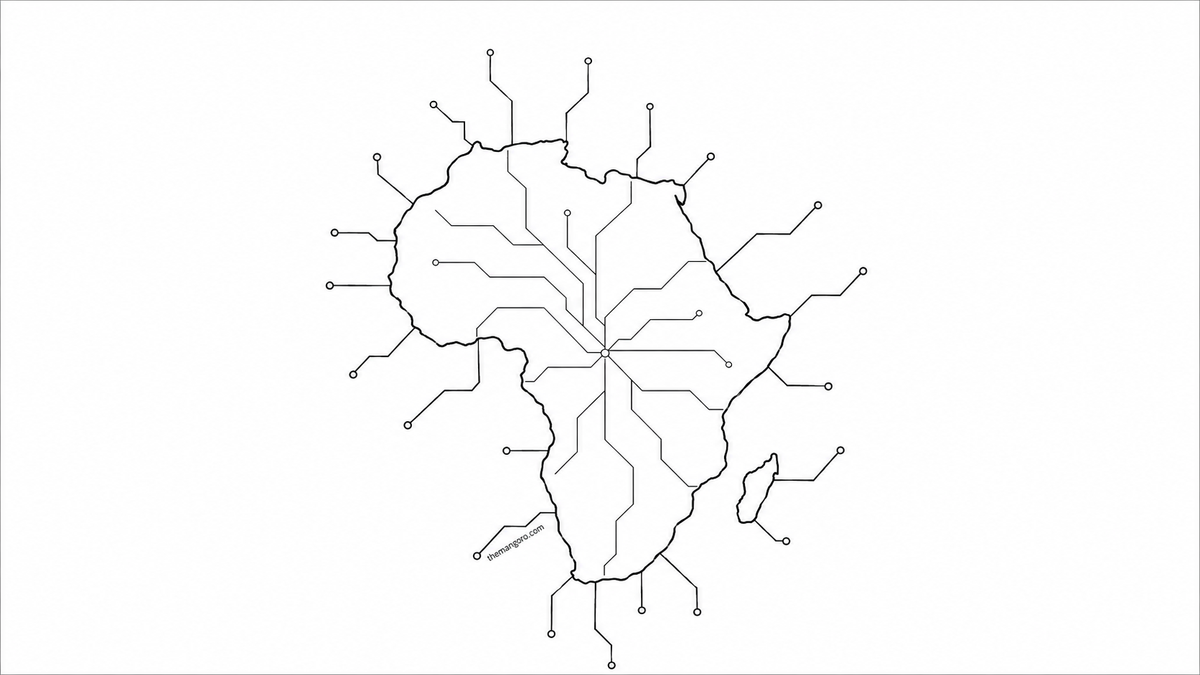
Africa needs AI built around the continent’s actual problems.
1.
Customs Without Confusion
Create an African trade engine that classifies goods, interprets rules of origin and explains customs requirements in plain language.
A furniture maker in Lagos should be able to ask what it takes to sell in Kigali and receive a usable answer. Customs officers could issue faster decisions, while businesses could inspect the reasoning and appeal mistakes. Continental trade becomes real at the border desk, not inside the conference hall.
2.
Fingerprint Every African Song
Build a continental listening system that identifies music played on radio, television, streaming services and in licensed venues.
Sub-Saharan Africa was the fastest-growing recorded music market in the world in 2024, up 22.6 per cent, and Africa still earns 1 to 2 per cent of global recorded revenue. Nigeria alone loses an estimated $231 million a year. Audio fingerprinting was solved in 2003. Every recognised play enters an open record that artists, producers and collecting societies can inspect. The technology already knows when a song is playing. The missing institution is one people trust to count honestly and send the money home.
3.
The Herbalist Files
Build an African traditional knowledge library that records medicinal plants, treatments and preparation methods in the languages of their custodians.
The archive would establish prior knowledge before an outside company claims invention. Researchers could also screen documented remedies for promising compounds, with ownership and payment terms agreed before any discovery. Some knowledge would remain private because its custodians said so. A library can preserve a secret without publishing it.
4.
Let Every African Language Speak
Digitise radio archives, church tapes, court recordings and oral histories, then use them to build speech systems for African languages.
Africa holds something close to two thousand languages. Most have no usable written corpus, and many carry orthographies invented by missionaries who could not hear tone. Sixty years of recorded speech sits in national broadcast archives from Ibadan to Makerere, unindexed, and how much of it survives is not documented anywhere we have been able to find. A Wolof speaker should reach a machine in Wolof without passing through French first. Communities control access to their voices and share in whatever the recordings earn.
5.
The African Cancer Centre
Connect slide scanners to regional diagnostic centres where AI sorts tissue samples by urgency before a pathologist reviews them.
Nigeria has about 105 pathologists. Britain has about 1,800 for 66 million people. Where the pathologist is absent, cancer gets treated on guesswork. The system would flag suspected cancers, place urgent cases first and send difficult slides to specialists elsewhere. One pathologist could support several hospitals without pretending that a machine has become a doctor. The human eye remains responsible. It simply reaches the dangerous case sooner.
6.
Tell Farmers What Is in the Soil
Combine soil scans, weather records and local crop data to give each farmer advice for the field they cultivate.
Blanket fertiliser recommendations treat unlike soils as though they were identical. A farmer could receive a voice message explaining what the soil lacks, what to apply and whether the likely yield justifies the cost. Crop disease photographs attract more attention. The exhausted ground beneath the crop may be the larger problem.
7.
Find the Children Who Have Fallen Behind
Give teachers a two-minute weekly voice test that reveals which pupils missed a concept and what each one needs explained again.
In a crowded classroom, a quiet child can remain lost for months. The system would return a simple report: twelve names, twelve difficulties, one teacher who can finally see them. This is smaller than the dream of an AI tutor for every child. It may be more useful on Monday morning.
8.
Find Where the Electricity Disappears
Use meter readings, transformer data and weather patterns to predict failures and identify losses across power grids and solar networks.
The system could warn that a transformer is close to collapse, locate abnormal consumption and show where a small solar grid would serve people better. Every hospital scanner, language model and digital classroom on this list eventually meets the same question: is there light?
9.
Give Africa a Trustworthy Map
Create an independent system that continually estimates populations, settlements and economic activity while mapping land claims with satellite images and recorded community testimony.
Governments cannot plan schools, hospitals, roads or elections using doubtful figures. The same system could identify parcel boundaries, while neighbours confirm ownership in their own languages. Every estimate should include its margin of error. A suspiciously precise number is still a suspicious number.
10.
See the Ships
Create a shared maritime system that finds illegal fishing vessels through satellite images, radar and unusual movement patterns.
A ship may disable its tracking signal. It cannot disappear from the sea. Coastal states could share one picture of suspicious activity and act before foreign fleets empty local waters. The same system could protect shipping routes and detect pollution. Its power would require strict limits because an eye built for the coast can eventually turn inland.